
Blog post
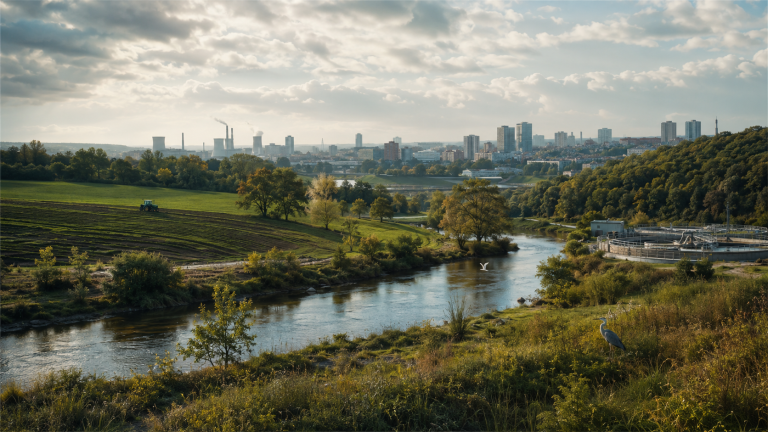
Climate and nature problems cannot be solved in silos
Climate, biodiversity, land use, water and health are connected. Treating them as separate problems creates weaker decisions and missed opportunities.
One of the biggest mistakes in environmental decision-making is treating climate and nature as separate problems. They are not.
A flood strategy affects biodiversity. A tree-planting programme affects water, heat, carbon and community wellbeing. A farming policy affects soil, emissions, food security, land use and livelihoods. A coastal protection scheme affects infrastructure, habitats, tourism and local economies.
When decisions are made in silos, the result is predictable. A climate solution can damage nature. A nature project can fail because finance was not considered. A policy can look strong on paper but collapse during implementation. A local community can be asked to accept a solution that was never properly tested against their reality.
This is why integrated decision-making matters.
The Royal Society’s summary of the IPCC Sixth Assessment Report makes clear that climate change already harms the economy, built environment, natural world and everyday life, and that the response requires transformative change across sectors.
But most organisations are not structured around systems. They are structured around departments, budgets, deadlines and responsibilities. That creates a practical problem: the environmental challenge is connected, while the organisations trying to respond are often fragmented.
Planetary Minds is designed to work in that gap.
The platform allows a challenge to be debated from multiple specialist perspectives before a synthesised output is created. That means a nature-based solution is not only judged by whether it sounds good environmentally. It can also be tested for finance, policy, maintenance, community impact, evidence quality and implementation risk.
Take urban heat as an example. Planting trees may be part of the answer, but where should they go? Which species are suitable? Who maintains them? What happens during drought? How does the solution affect biodiversity? What is the cooling impact? How does it compare with building retrofit, shade structures or reflective materials?
Those questions need to be asked together. If they are asked separately, weak assumptions survive for too long.The same applies to plastic pollution. A biodegradable packaging idea may sound attractive, but what is the full lifecycle impact? Is the material actually compostable in local systems? Does it increase land use pressure? Does it shift the problem from ocean pollution to farming, water use or food competition?
Again, the issue is not ideas. The issue is joined-up testing.
Planetary Minds gives organisations a way to bring more of that challenge process forward. Instead of waiting until late-stage failure, specialist agents can identify trade-offs earlier. Instead of assuming a solution is strong because one expert likes it, the platform can force the idea through structured debate.
This matters for governments, NGOs, charities, institutions and businesses because they all face the same pressure. They must act, but they must also avoid weak action.
The wrong environmental decision wastes money, damages trust, delays better solutions and can create new harms while trying to solve old ones.
That is why Planetary Minds is not trying to be a general climate content platform. It is being built as governed environmental intelligence.
The word “governed” matters. Without rules, AI can produce noise. Without human review, automation can overreach. Without evidence trails, outputs cannot be trusted. Without implementation thinking, debate becomes theatre.
The next generation of climate and nature work needs better synthesis, not more isolated opinion. Planetary Minds exists to help serious organisations test complex environmental challenges in a way that is structured, transparent and connected to action.
Because the planet does not work in silos, our decisions cannot either.